

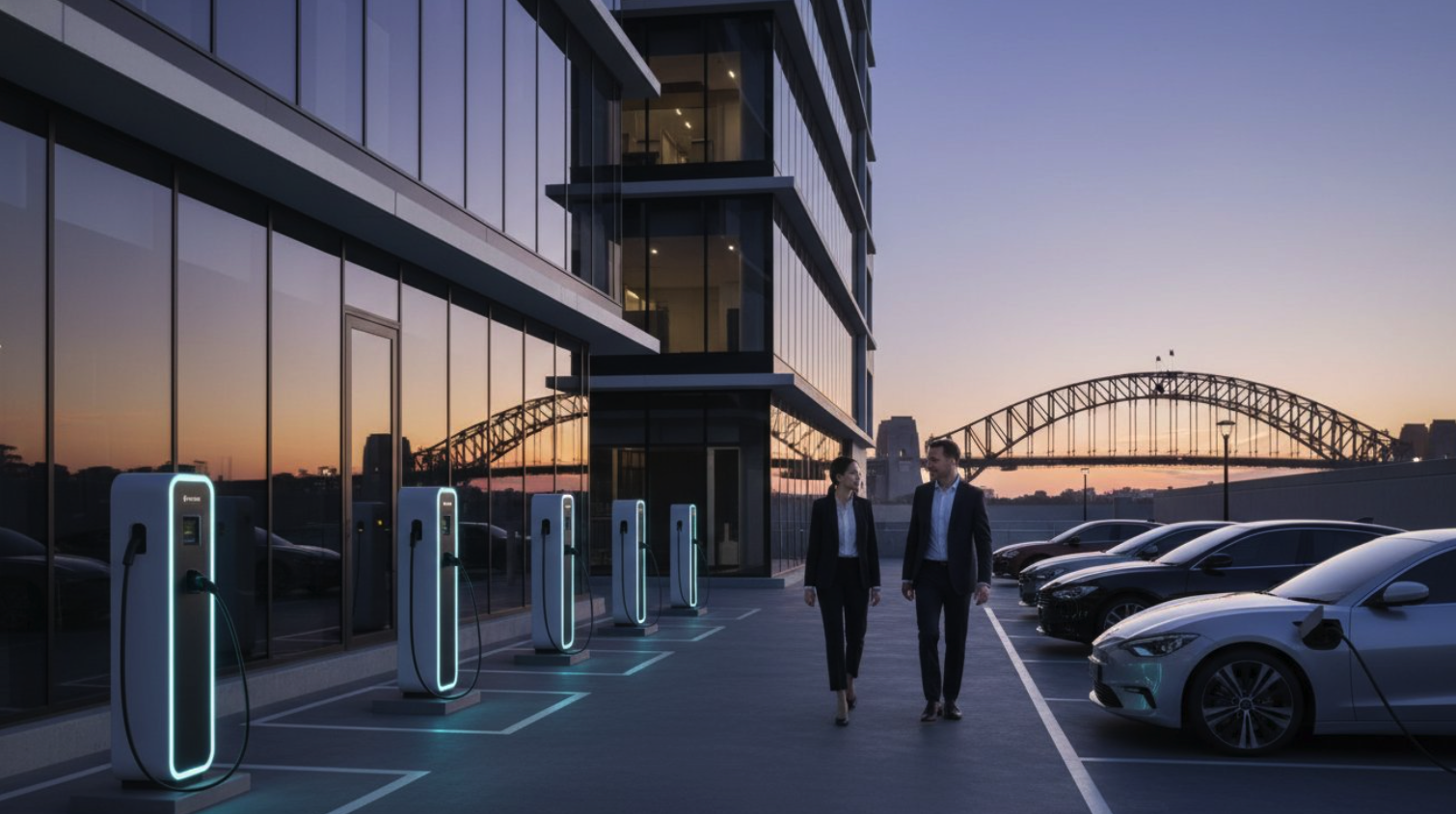
EV Charging Solutions for New Developments
Builders & Developers: Is Your Development Prepared for Future EV Demand?
EV infrastructure can no longer be treated as an afterthought
For builders and developers in Australia, EV charging is no longer a “nice-to-have.” It now plays a critical role in compliance, design, cost planning, and long-term asset value.
The commercial property market is undergoing a rapid transformation. By 2026, electric vehicles are expected to account for around 20% of all new car sales in Australia, driven by the National Electric Vehicle Strategy and state-based incentives.
As adoption accelerates, EV charging for new developments has shifted from an optional amenity to essential infrastructure. Developments that fail to plan for this demand risk falling short of tenant expectations — and becoming outdated before they even reach full occupancy.
That’s where we come in. At Future Charging Solutions, we work with builders and developers from concept through to completion — providing end-to-end EV charging solutions including feasibility, design, infrastructure planning, installation, and commissioning.
Speak to our team early to ensure your development is designed right from day one — practical, scalable, and ready for future demand.

As EV adoption accelerates, charging infrastructure is becoming a fundamental requirement in modern developments.
For Australian builders and developers, this extends beyond compliance with the National Construction Code and into broader considerations including electrical design, safety, cost efficiency, and long-term scalability. A well-informed approach at the planning stage ensures your development is both compliant and strategically positioned for the future.
EV Charging Regulations & Compliances
1.National Constructions Code (NCC)
EV charging is now firmly on the regulatory radar for new developments across Australia. The National Construction Code (NCC 2022) introduced baseline requirements for EV readiness, with further updates expected in NCC 2025 and 2026 to strengthen provisions around electrical capacity, infrastructure allowances, and future scalability. For builders and developers, this means EV charging can no longer be treated as an optional upgrade — it must be considered early in the design phase to ensure compliance and avoid costly redesigns.
👉 Learn more about National Construction Code 2025
2. Australian Standards & Electrical Compliance
Beyond the National Construction Code, EV charging installations must comply with core Australian Standards, including AS/NZS 3000 (Wiring Rules) and AS/NZS 3017 for testing and verification. These standards govern how electrical systems are designed, installed, and commissioned to ensure safety and performance. For developers, this means EV infrastructure must be fully integrated into the base building electrical design — not treated as an afterthought. Proper compliance ensures systems are safe, certifiable, and capable of supporting long-term operation without costly rework.t only compliant, but also practical, scalable, and ready for long-term use.
3.Fire Safety & Risk Considerations
Fire safety is an increasingly important consideration for EV charging, particularly in enclosed basement car parks. Guidance from authorities such as Fire and Rescue NSW highlights the importance of proper installation, clear access, isolation points, and appropriate ventilation. While EV charging does not introduce fundamentally new risks when designed correctly, poor planning can create compliance and operational challenges. Early coordination with fire engineers ensures that EV infrastructure aligns with safety requirements and avoids delays during approvals or certification.
4.Electrical Design & Capacity Planning
EV charging must be considered as part of the overall electrical strategy from the earliest design stages. This includes assessing Main Switchboard (MSB) capacity, planning sub-distribution through dedicated EV distribution boards, and allowing for future load expansion. Without this upfront planning, developments risk requiring expensive upgrades such as transformer or substation enhancements. A well-designed system ensures that available capacity is used efficiently while maintaining flexibility to scale as demand increases.
Compliance is just the starting point!
Meeting minimum requirements ensures your project is approved — but it doesn’t define the success of your development.
A compliant design may still fall short of real-world demand if it doesn’t account for future EV uptake and charging behaviour. As EV adoption accelerates across Australia, developers can no longer rely on compliance alone. It’s not just about electrical capacity — it’s about having the right strategy, infrastructure, and flexibility in place to support future demand.
Without a scalable plan, buildings risk costly upgrades, limited charger rollout, and falling short of tenant expectations. The right approach from day one ensures your project is efficient, future-ready, and positioned as a premium asset in a rapidly evolving market.
Build It Right from Day One

The most cost-effective and efficient time to implement EV infrastructure is during design and construction. At this stage, access is open, coordination is simpler, and the incremental cost of installing backbone infrastructure is significantly lower compared to retrofitting after completion.
By planning early, developers can ensure that the necessary conduits, cable pathways, and electrical capacity are already in place, allowing chargers to be rolled out over time without major disruption. This approach avoids the need for invasive works such as trenching, switchboard upgrades, or reconfiguration of existing systems — all of which can be expensive and time-consuming once a building is operational.
Just as importantly, delivering a development that is EV-ready from day one removes future burden from owners, strata committees, or asset managers. Instead of revisiting design decisions later, the groundwork has already been done — saving time, reducing costs, and enabling a smoother transition as demand grows.
Deliver a Better End Product for Your Clients

When EV infrastructure is left to be addressed after completion, the result is often inconsistent, fragmented, and difficult to manage. Different installers, varying equipment, and ad-hoc decisions can compromise both the appearance and performance of the system — particularly in high-end or design-focused developments.
By finalising your EV strategy during the development phase, you retain full control over how the system is designed, installed, and presented. This includes selecting a reliable charging provider, ensuring consistency across all installations, and integrating the infrastructure seamlessly into the overall building design.
For premium developments, where presentation, quality, and user experience matter, this level of control is critical. It allows you to deliver a cohesive, future-ready solution that reflects the standard of the project — while also making life easier for your clients, who can move into a building where everything is already in place and ready to use.
Unlock Green Star & NABERS Performance

As sustainability expectations continue to rise, EV infrastructure has become a key contributor to how buildings are assessed, leased, and valued. High-quality tenants — particularly corporate occupiers — are increasingly guided by ESG commitments, and they actively seek buildings that support electrification and future mobility.
Integrating EV charging into your development can contribute to Green Star outcomes, particularly within movement and transport categories, while also aligning with broader sustainability objectives. At the same time, concerns around increased energy consumption can be addressed through smart load management, ensuring that EV charging is integrated without compromising NABERS Energy performance.
Rather than being seen as an additional load, EV infrastructure becomes part of a smarter energy strategy — one that enhances your building’s positioning, supports tenant requirements, and strengthens long-term asset value.
Developments that go beyond compliance don’t just meet requirements — they perform better, attract stronger tenants, and maintain their value over time!
We Support Your EV Charging Journey From Concept to Completion!
Delivering EV charging infrastructure in a new development should not feel like a separate project bolted on at the end. When planned properly, it becomes a seamless part of the overall design, construction, and handover process.
At Future Charging Solutions, we work with builders and developers from the earliest stages to ensure EV infrastructure is practical, compliant, scalable, and ready to support future demand. Our role is to simplify the process, reduce risk, and help you deliver a better end product for your client.

Step 1 — Early Consultation & Feasibility
Every successful EV project starts with early planning. At this stage, we review your development type, likely user demand, electrical considerations, and overall project objectives. Whether the site is an apartment building, shopping centre, hotel, club, or community facility, we help identify the right pathway before design decisions are locked in.
This early input allows you to understand what is possible, what needs to be allowed for, and how to avoid unnecessary costs later. It also helps ensure EV charging is considered as part of the broader building strategy — not left as a last-minute addition.
At this stage, we identify all suitable charger options for the site and provide as much guidance, recommendations, and insight as possible to help the client select the best chargers based on our proposed items and solutions

Step 2 — Design & Infrastructure Planning
Once the direction is clear, we work alongside your consultants, designers, and engineers to integrate EV charging into the design. This includes planning the backbone infrastructure and cable pathways for buildings, clearance, charger locations for commercial sites, load management strategy, and the electrical allowances required for both day-one use and future expansion.
This is one of the most important stages of the process, because it gives you control over how the final solution will look, function, and scale. For premium developments, this also means ensuring the EV infrastructure aligns with the overall presentation and standard of the project.
During The construction stage, our team coordinates with your construction and electrical teams to ensure the necessary works are delivered smoothly and in line with EV infrustrucher and chargers installation.
Step 3 — Charger Installation & Commissioning
Once the site is ready, we install and commission the selected charging hardware based on the agreed rollout strategy. This may include chargers installed from day one, or a staged deployment model where the infrastructure is already in place and chargers are added as demand grows.
At this stage, we ensure the system is tested, compliant, and operating as intended. Where required, we can also support with user access, software setup, billing configuration, and system integration so the final product is not only installed, but fully usable.

Step 4 — Handover, Support & Future Expansion
A well-planned EV solution should continue delivering value well beyond the construction phase. After handover, we remain available to support expansion, optimisation, and ongoing operation as demand increases over time.
This gives your client confidence that they are not being left to navigate future EV infrastructure decisions alone. It also reinforces the value of delivering the right system from the start — one that can grow with the building, protect asset value, and continue to meet user expectations for years to come.
Why This Process Matters?
For builders and developers, this approach creates far more than just EV compliance. It helps deliver a smoother build, better cost control, stronger design integration, and a more complete end product for the client. Instead of leaving future owners, operators, or committees to work it out later, the project is handed over with a clear, well-considered EV strategy already in place. That means fewer headaches, better outcomes, and a development that is genuinely ready for the future.
Frequently Asked Questions (FAQ)
-
What are the minimum EV charging requirements for new commercial buildings in Australia?
The National Construction Code (NCC) 2022 does not currently mandate a fixed percentage of EV chargers for new commercial buildings. Instead, it focuses on ensuring electrical installations are safe, compliant, and capable of supporting future infrastructure where required.
However, upcoming updates under NCC 2025 (expected to be adopted from 2026) are moving toward stronger EV-ready provisions, including increased emphasis on electrical capacity, infrastructure allowances, and future scalability.
In practice, EV requirements are often influenced by:
Local council Development Control Plans (DCPs)
Sustainability targets such as Green Star or NABERS
Project-specific design and tenant expectations
This means many developments already go beyond minimum NCC requirements to avoid future upgrades and remain competitive.
At Future Charging Solutions, we help you design EV infrastructure that not only meets current standards, but is scalable, cost-effective, and ready for future demand — without overbuilding upfront.
-
The cost of installing EV charging in a commercial development varies depending on the type of charger, site conditions, and how early the infrastructure is planned into the project.
⚡ AC Chargers (typical for workplaces, apartments, hotels)
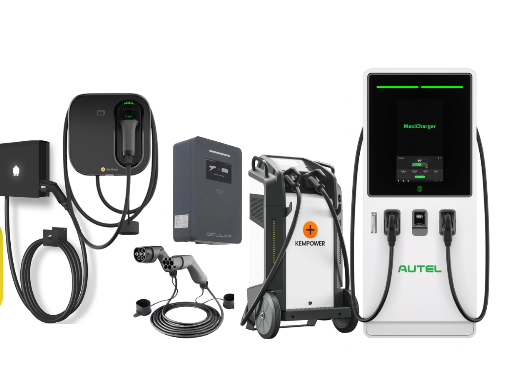
For most commercial developments, AC chargers (7kW–22kW) are the standard solution.
Typical cost: A$2,000 to A$12,000+ per charging bay
Includes: charger hardware, cabling, installation, and basic civil works
Cost drivers:
Distance from main switchboard
Cable routing and containment
Number of chargers installed
Load management requirements
When designed during construction, costs are significantly lower due to easier access and coordination.
⚡⚡ DC Fast Chargers (typical for retail, public, high-traffic sites)
For sites such as shopping centres or public charging locations, DC fast chargers (20kW–180kW+) may be required.
Typical cost: A$10,000 to A$150,000+ per charger
Includes: charger hardware, electrical upgrades, and installation
Additional considerations:
Potential transformer or substation upgrades
Higher grid connection requirements
Civil works and space planning
These systems are designed for high utilisation and faster charging, but require more detailed planning and higher upfront investment.
💡 Why early planning matters
The biggest cost factor is not the charger itself — it’s how and when the infrastructure is installed.
At Future Charging Solutions, we provide detailed feasibility assessments and design support to give you clear, fixed pricing upfront — helping you avoid unexpected costs during construction and ensuring your EV strategy is built right from the start.cription text goes here
-
AC chargers are typically the preferred solution for commercial office buildings, as employees usually park for extended periods (e.g. 6–8+ hours). A standard 7kW or 22kW AC charger can comfortably deliver a full day’s charging during this time, making it both practical and cost-effective.
In contrast, DC fast chargers are designed for short dwell times and high turnover environments, such as shopping centres or public charging locations, where users need a rapid top-up rather than all-day charging.
Choosing the right solution isn’t just about charger type — it’s about aligning with how the site will actually be used, while ensuring the infrastructure remains scalable and efficient over time.
At Future Charging Solutions, we work with builders and developers to assess your project and recommend the right mix of AC and DC charging — designed around your users, your site, and your long-term goals. Speak to our team early to ensure your EV strategy is practical, cost-effective, and built to perform from day one.
-
Installing EV charging can contribute up to 5% of the total points needed for a high Green Star rating and positively influences your NABERS Energy score. These certifications increase the market value of your asset and attract premium tenants who prioritize sustainability. Our innovative EV charging solutions are designed to integrate with building management systems to optimize energy efficiency. You should document your charging energy sources now to claim maximum Green Power credits in your next assessment for peace of mind.
-
Under NCC 2022, buildings are only required to be “EV-ready”, not fully equipped with chargers.
This means developers must:
Allow electrical capacity for future EV charging
Install conduits and pathways for cabling
Provide space for EV distribution boards and metering
Prepare most (or all) car spaces for future charger installation
👉 In simple terms:
You don’t need to install chargers now — but you must make future installation easy and cost-effective.🟡 NCC 2025 (Draft / Proposed Direction)
This is where things get interesting — and where most confusion comes from.
👉 Core shift (proposed):
From “EV-ready” → “EV-installed”
💡 Proposed changes included:
Mandatory installed chargers in a % of parking spaces
Stronger electrical capacity requirements
Dedicated EV infrastructure across more building classes
More integration with energy + electrification strategy
Example (draft intent):
Chargers required in:
Apartments
Commercial buildings
Hotels / retail / offices
❗ BUT IMPORTANT:
👉 These EV-specific changes were NOT included in the final NCC 2025 preview
EV charging provisions were pulled back / deferred
NCC 2022 rules still apply