

Case Study: EV Charging Backbone - Level 2
Future-Ready EV Charging Infrastructure for Canopy Apartments, Cammeray
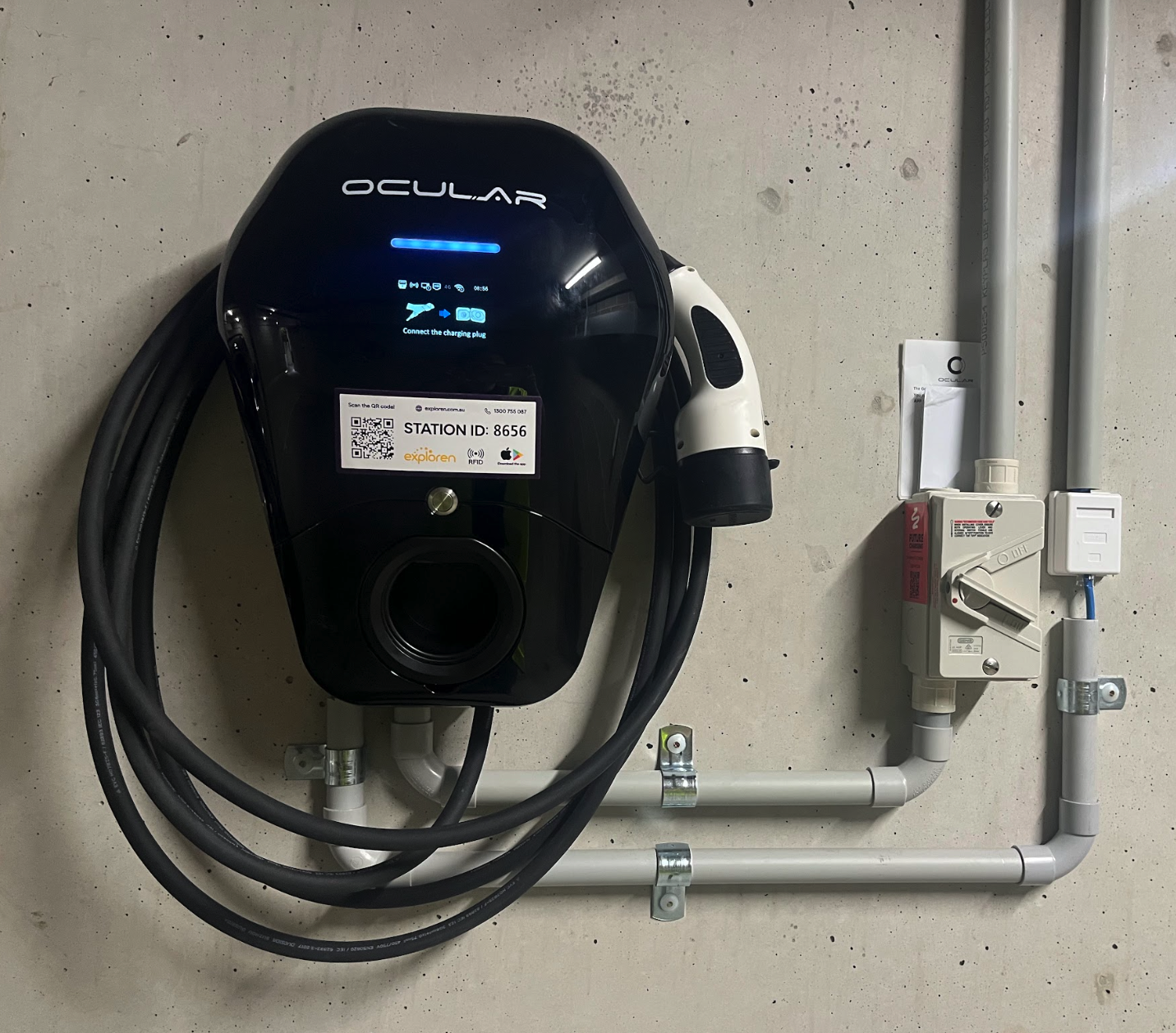
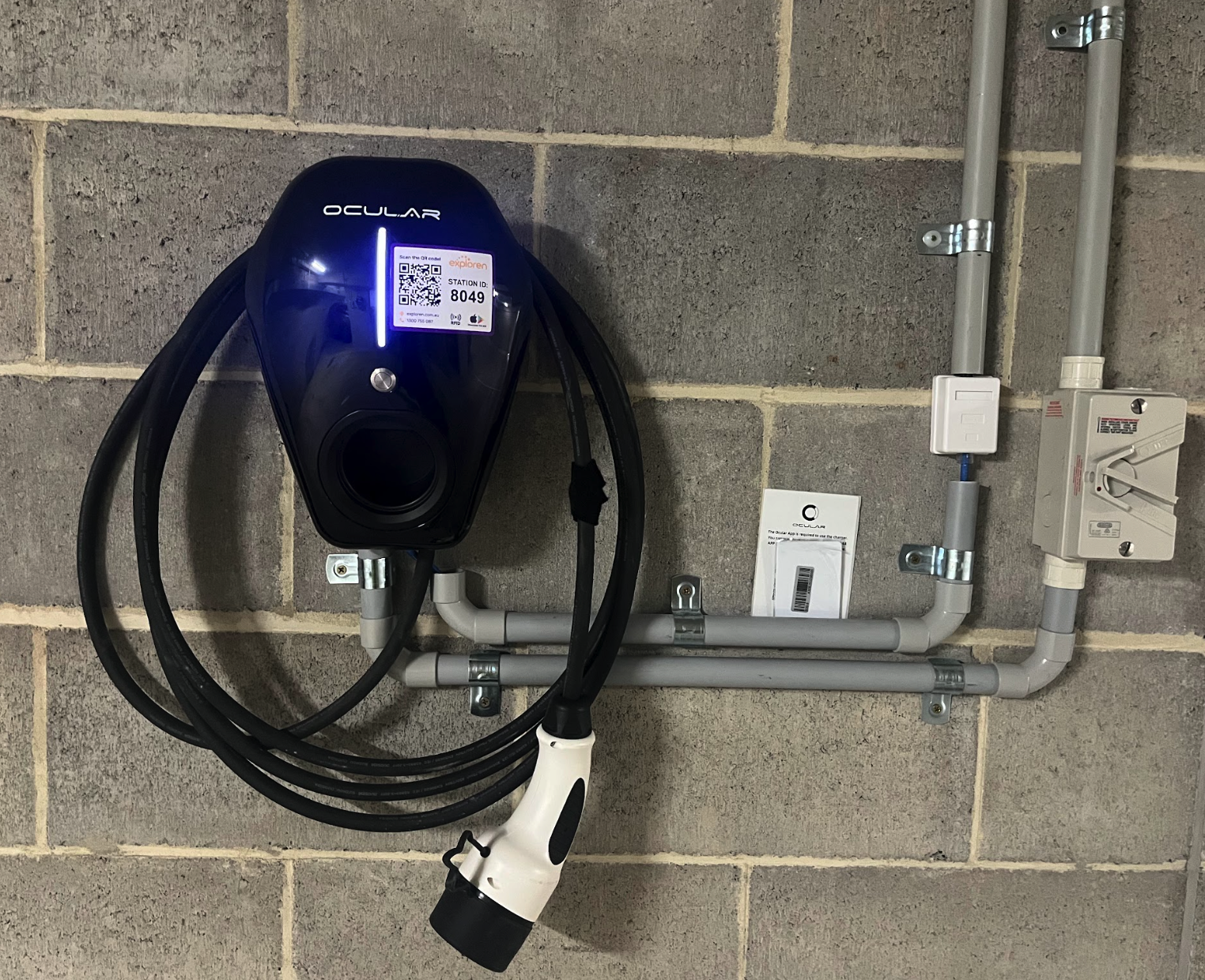
Project Overview
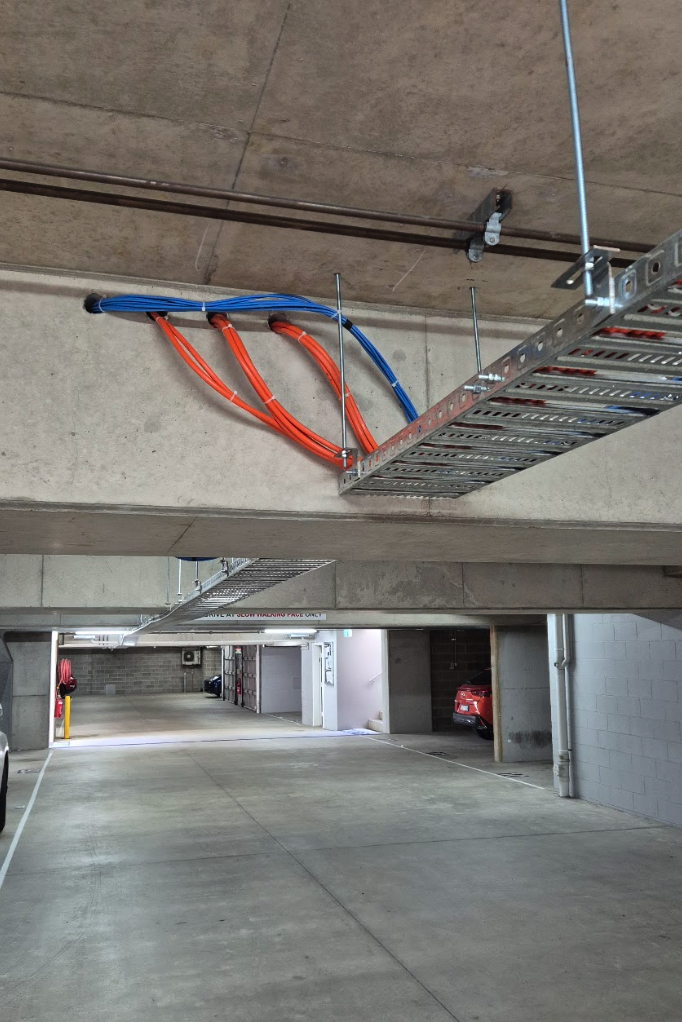
Future Charging Solutions was engaged to design and install a future-ready EV charging backbone for Canopy Apartments at 570 Miller Street, Cammeray.
Delivered as part of the building’s approved NSW EV Ready Building Grant project, the system provides EV charging infrastructure for 18 parking spaces—one for each residential apartment.
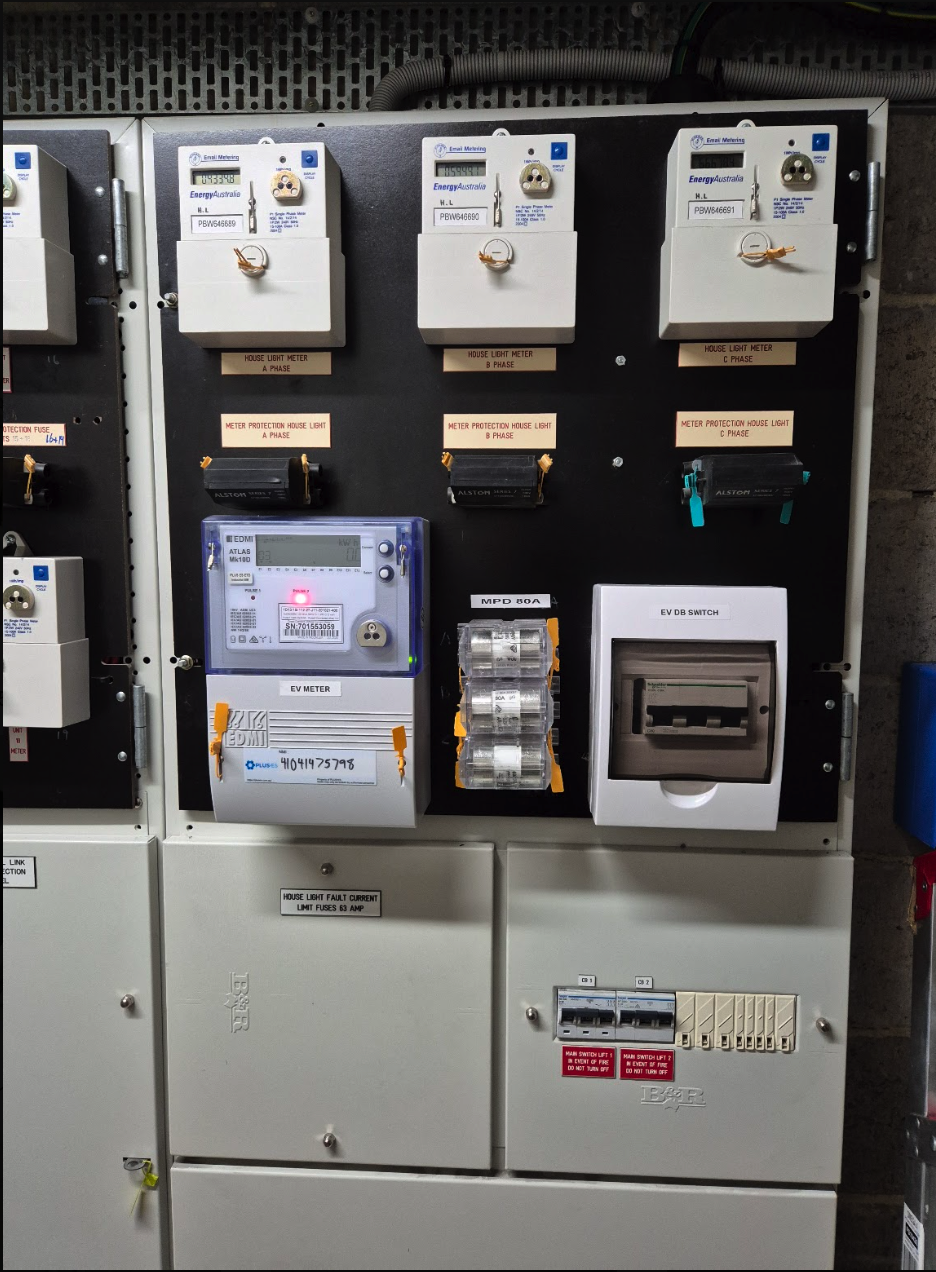
The solution allows residents to install an approved 7 kW EV charger when required, without the owners corporation having to install chargers in every parking space upfront. Power is supplied through a dedicated common-property electricity meter, with integrated billing enabling residents to pay directly for their individual charging usage.
Key Features
Dynamic Load Management:
An Ocular Dynamic Load Management system continuously monitors the building’s electricity demand and adjusts EV charging speeds according to the available capacity. This protects the building’s electrical infrastructure while supporting multiple chargers.Infrastructure for 18 Parking Spaces:
Dedicated 32A single-phase electrical circuits, isolators and network connections were installed for all 18 parking spaces, supporting the future connection of 7 kW EV chargers.Integrated Resident Billing:
Exploren billing software measures each resident’s charging consumption, collects payments and reimburses the owners corporation—removing the need for strata to manually recover electricity costs.Connected and Scalable:
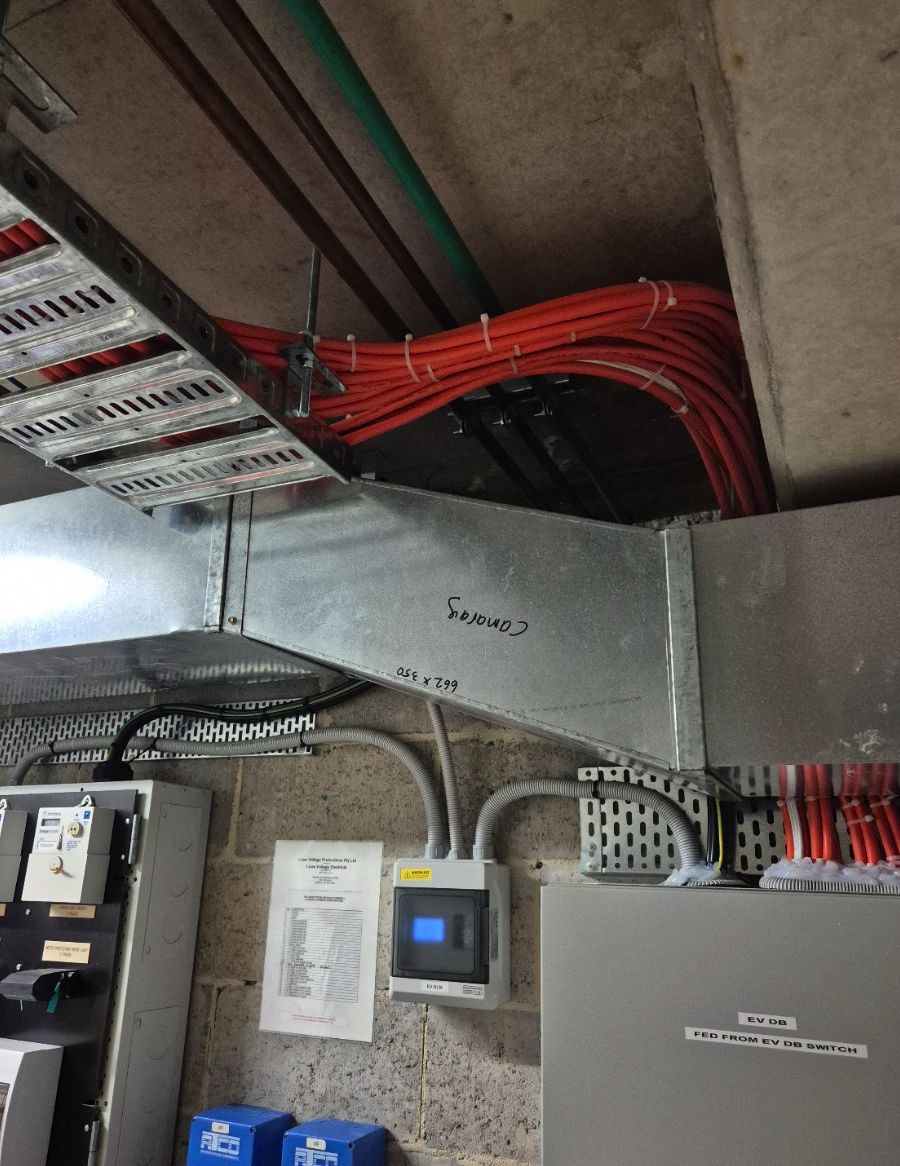
A dedicated network cabinet, managed data switch, 4G modem and wired data connection to every parking space support reliable communication between the chargers, billing platform and load-management system.Compliant Installation:
The electrical installation was tested and verified in accordance with AS/NZS 3000 using the testing methods outlined in AS/NZS 3017. The project also included as-built drawings, operating and maintenance documentation, and a 52-week defects liability and maintenance period.
Challenges and Solutions
Challenge 1: Limited electrical capacity
The building’s existing electrical infrastructure did not have sufficient capacity to support unrestricted simultaneous EV charging across all 18 apartments. Increasing the incoming grid supply would have required significant and costly infrastructure upgrades.
Solution: Future Charging Solutions installed an Ocular Dynamic Load Management system that monitors the building’s real-time electricity demand and allocates the available capacity to connected EV chargers. Charging speeds automatically reduce during high-demand periods and increase when more capacity becomes available, avoiding unnecessary upgrades to the incoming electricity supply.
Challenge 2: Recovering electricity costs fairly
Because the EV charging system is supplied through common-property electricity infrastructure, the owners corporation needed a reliable way to identify each resident’s consumption and recover the associated electricity costs.
Solution: A new dedicated Ausgrid electricity meter was installed for the EV charging system, together with Exploren billing software. Residents pay for their own charging sessions through the platform, while the collected electricity charges are reimbursed to the owners corporation.
Challenge 3: Preparing every apartment for future EV charging
Installing chargers only for current EV owners would have resulted in repeated electrical work, inconsistent installations and higher long-term costs as demand increased.
Solution: A complete backbone was installed for all 18 apartments. Each parking space received a dedicated 32A electrical circuit, local isolator and wired network point, allowing residents to connect a compatible charger as demand grows.
Challenge 4: Protecting the building’s electrical infrastructure
Future chargers needed to operate as part of one coordinated system rather than as independent electrical loads that could collectively overload the building.
Solution: The charging infrastructure was designed around an OCPP 1.6-compatible communication backbone. Every future charger must be commissioned and integrated with the central load-management system, ensuring the charging network remains controlled, safe and reliable.
Challenge 5: Reliable charger and system communication
The load-management and billing platforms require a stable data connection to monitor chargers, manage available power and record charging sessions.
Solution: Future Charging Solutions installed a dedicated network cabinet, 24-port managed data switch, 4G modem and CAT6 cabling to every parking space. This provides a reliable communications backbone for the DLM, resident billing and future charger connections.
Project Outcome
Future Charging Solutions delivered a scalable, compliant and centrally managed Level 2 EV charging backbone for all 18 apartments at Canopy Apartments.
The building can now progressively connect resident chargers as demand increases, without repeating the core electrical and communications work for each new installation. Dynamic Load Management protects the existing electrical infrastructure, while integrated billing ensures residents pay directly for their own electricity consumption.
The result is a practical and future-ready solution that supports growing EV adoption while giving the owners corporation greater control over safety, energy use and ongoing operating costs.
Key Results
EV charging infrastructure provided for 18 residential parking spaces
One dedicated 32A electrical circuit and isolator per apartment
Infrastructure suitable for future 7 kW EV chargers
Ocular Dynamic Load Management installed and commissioned
Dedicated Ausgrid electricity meter for the EV charging system
Exploren resident billing and cost-recovery platform
Wired network connection provided to every parking space
Dedicated 4G communications and network cabinet
OCPP 1.6-compatible charging backbone
Tested and verified in accordance with AS/NZS 3000 and AS/NZS 3017
As-built drawings and operating and maintenance documentation provided
52-week defects liability, maintenance and workmanship support