APARTMENT BUILDINGS · SYDNEY & NSW
A building-wide plan for EV charging.Clear options for your strata.
Compare individual-meter connections, shared infrastructure, common-area chargers and managed power outlets.
Future Charging Solutions helps owners corporations, strata managers and building committees plan charging around the building’s capacity, residents and budget.
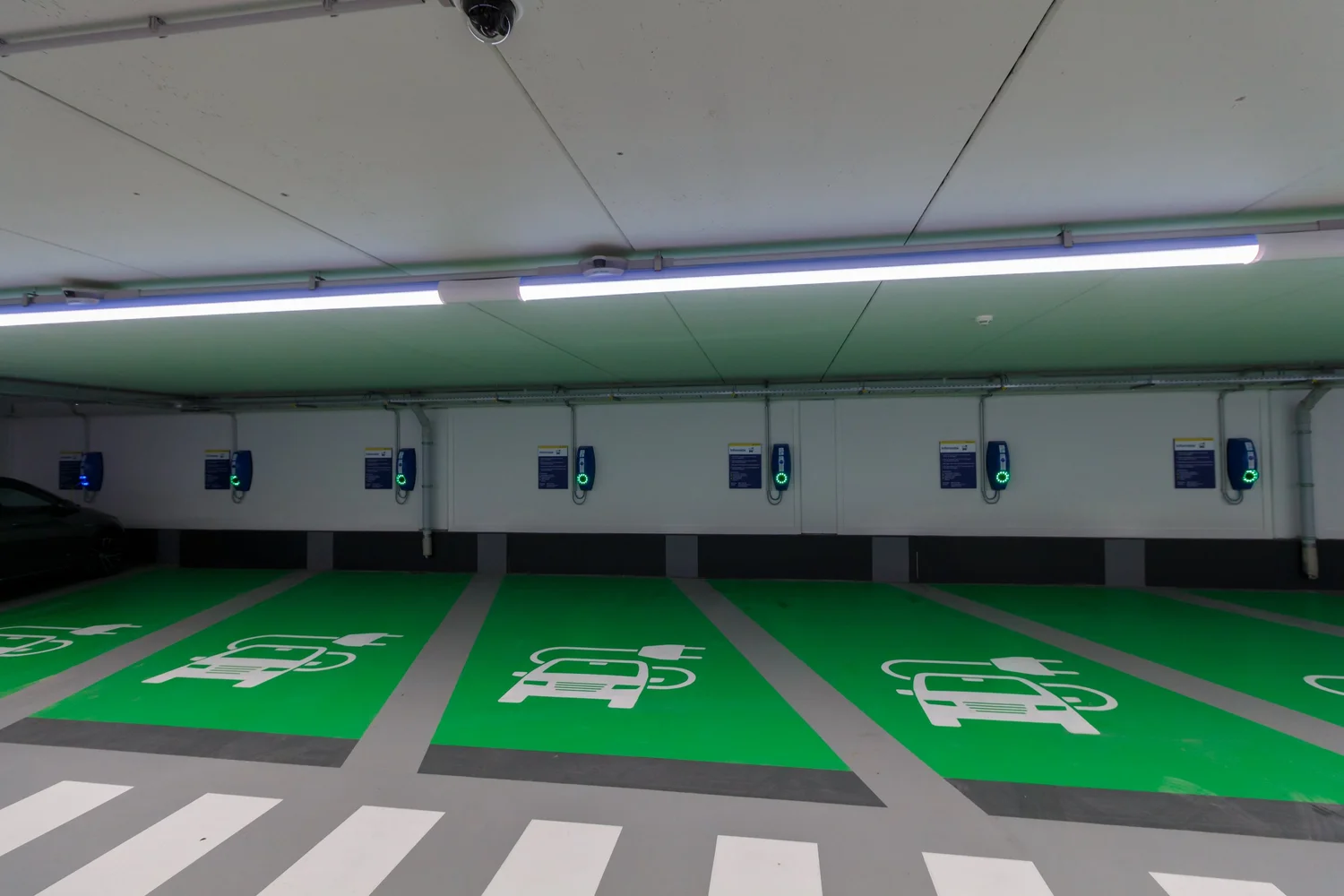
PLAN FOR THE BUILDING, NOT JUST THE FIRST CAR
EV charging infrastructure for apartment and strata buildings
The first resident request is an opportunity to establish a consistent plan. A coordinated approach helps the owners corporation understand what the site can support, how costs will be allocated and how later residents can connect.
There is no universal best charger or electrical arrangement. Building age, meter locations, cable routes, parking ownership, available capacity and daily driving needs all influence the practical options. A feasibility assessment can help compare them before equipment is selected.
Understand demand
Ask residents about current vehicles, likely future interest, parking duration and daily driving. Use the results to define an initial stage and reasonable expansion assumptions.
Assess the infrastructure
Review supply, switchboards, metering, cable pathways and communications in the car park. Identify constraints and any work needed to support the proposed model.
Agree the operating rules
Define who can connect, which equipment is compatible, who pays and how support is arranged. A written process makes future requests easier to assess consistently.
FOUR APPROACHES TO COMPARE
Choose the infrastructure model that suits your building
Resident-meter connections
Where technically feasible, a charger can be supplied through the resident’s own electricity meter. Charging energy then appears on that resident’s electricity account, avoiding a separate common-property energy-recovery arrangement for that connection.
Check: meter location, cable distance, available capacity, common-property access and the strategy for multiple residents connecting over time.
View the Cremorne project →A shared Level 2 backbone
A coordinated electrical backbone can support compatible chargers in individual parking bays, using common-property supply with an agreed metering and billing system. Chargers may be added in stages as residents need them.
Check: initial and future capacity, compatible equipment, load management, software costs, billing responsibility and the cost of each later connection.
View the Fairy Meadow project →Shared EV chargers
Shared charging bays may suit buildings where dedicated connections are difficult or initial demand is limited. Residents use a common facility under agreed access, payment and parking rules.
Check: bay ownership and permitted use, booking or queuing arrangements, vehicle movement, accessibility and whether enough charging time will be available to all intended users.
Explore a shared public charging example →Managed power-outlet infrastructure
A purpose-designed, managed outlet system can be considered where longer overnight parking and daily energy needs make lower-power charging suitable. It must be assessed as an electrical installation, not assumed to be a spare existing socket.
Check: the vehicle and portable charging equipment, outlet suitability, energy delivery, load controls, billing and the building’s agreed installation requirements. Compare actual quotations rather than assuming a fixed percentage saving.
View the Meadowbank project →MAKE COSTS AND RESPONSIBILITIES CLEAR
Electricity recovery, load management and support
Fair energy allocation
For common-property supply, agree how individual consumption is measured, what tariff applies and how the owners corporation is reimbursed. Include software, payment and administrative costs in the comparison.
Managed capacity
Suitable load management can allocate the power available to charging. It does not create extra supply, replace protection or guarantee every vehicle’s energy target. Check demand against the available parking window.
Ongoing operation
Identify who administers access, receives fault reports and arranges servicing. Confirm warranty, support hours, response targets and responsibility for software and communications subscriptions.
Compare ownership and funding models
The owners corporation may compare an outright infrastructure purchase with suitable finance or service arrangements. Review total costs, ownership, contract duration, maintenance and end-of-term conditions. Low initial payments do not mean the installation is free.
Check current grant information directly with the programme administrator. The NSW Government’s apartment EV-readiness guidance is a useful starting point. Funding availability and eligibility must be confirmed before relying on a rebate in the budget.
OCN members can also review our OCN member offers and confirm the applicable terms with our team.
A REVIEWABLE PLAN FOR THE COMMITTEE
Approvals, installation and staged rollout
Define the building’s goals
Gather parking plans, existing electrical information and resident demand. Establish who will coordinate the project and what the committee needs to make an informed decision.
Compare feasible options
Review the electrical and physical site, identify constraints and compare practical charging models. The scope should distinguish shared infrastructure from individual resident connection costs.
Confirm the required process
Ask the strata manager or legal adviser to confirm the current approval pathway, any by-law requirements and responsibilities for the proposed work. Do not assume a general approval rule applies to every charger request.
Make future connections clear
Provide the agreed documentation and operating instructions. Record compatible equipment, connection procedures, cost allocation and how future demand or expansion will be assessed.
Installation planning should address resident access, temporary bay closures, cable protection, communications and any required specialist input. For basement car parks, coordinate the project’s electrical and fire-safety requirements with the relevant professionals.
Residents seeking an individual installation can also explore our apartment EV charging page. This page focuses on the building-wide infrastructure decision.
QUESTIONS FROM STRATA COMMITTEES
Apartment-building EV charging FAQs
Can a resident install a charger without a building-wide rollout?
An individual connection may be feasible, but it still needs the applicable approvals and a technical assessment. Consider how it fits the building’s capacity and future connection strategy before proceeding.
Does every resident have to buy a charger immediately?
No. A staged backbone can allow chargers to be added as needed, where the design supports it. The proposal should explain the initial shared works and the later cost and process for each resident.
Who pays for the electricity?
That depends on the electrical arrangement. A resident-meter connection uses that resident’s account. Common-property supply generally needs an agreed system for measuring and recovering individual charging costs.
Are managed power outlets suitable for everyday charging?
They may be suitable when the vehicle, equipment, parking time and daily energy demand align. The electrical system and controls need proper design. Lower-power charging is not automatically sufficient for every resident.
Will load management avoid an electrical upgrade?
It may help use existing capacity, but an assessment must show whether the resulting energy delivery meets the building’s needs. Some sites or future expansion stages may still require upgrades.
Can the building receive a grant?
Possibly, depending on the current programme, building and proposed works. Check official eligibility and timing before committing expenditure. FCS can help define the project scope but cannot guarantee funding approval.
RELATED READING
Resources for your next committee discussion
LET’S PLAN YOUR BUILDING
Turn the first request into a clear charging plan.
Tell us about your parking layout, resident demand and current infrastructure. We will help identify a practical starting point.
Discover Smarter EV Charging Solutions
Apartment EV charging project
Awards, Accreditations & Industry Memberships